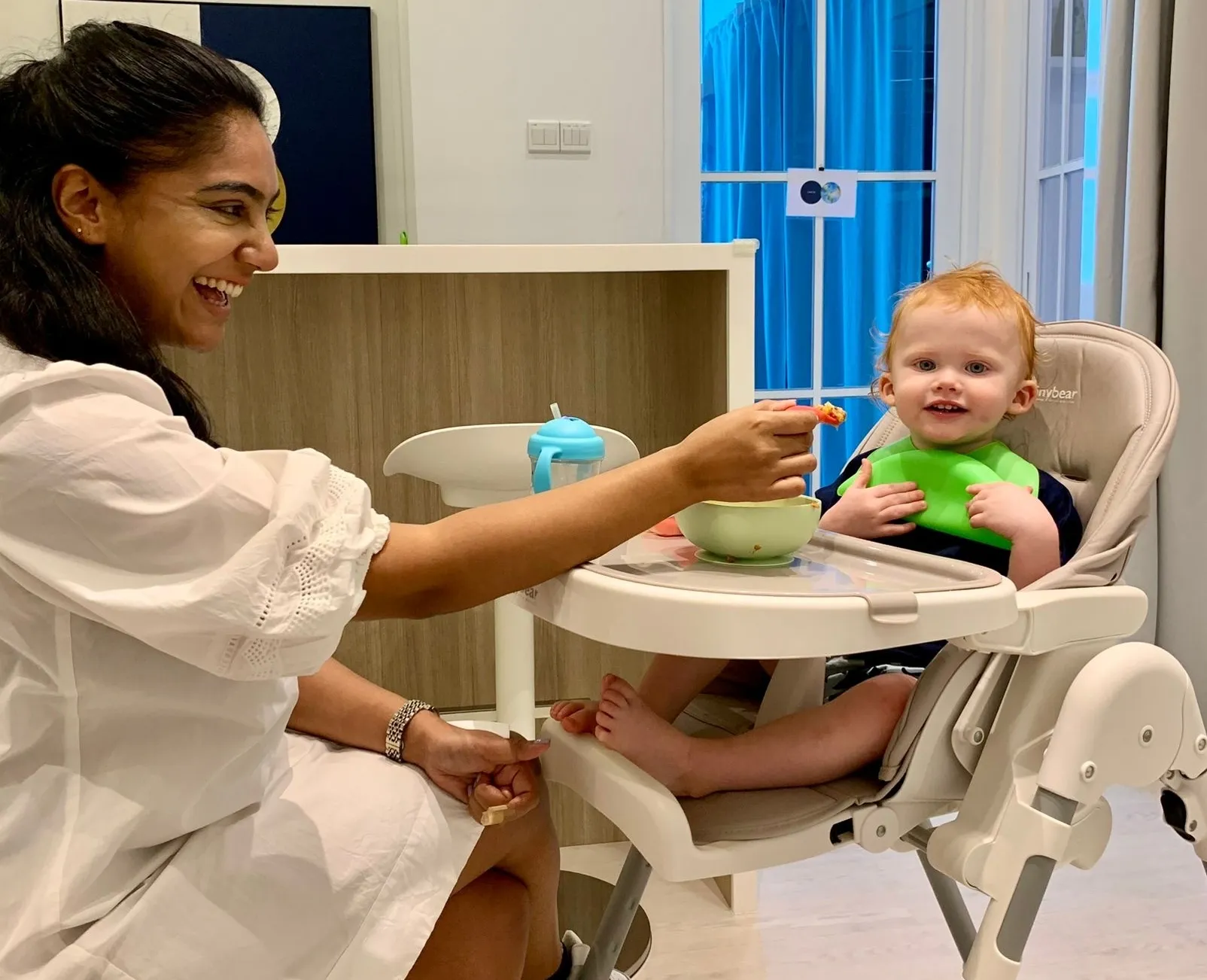


Simple, Science-Backed Ways to Enjoy More Meaningful Moments Together
If you’ve ever had a “conversation” with your toddler that involved pointing, grunting, half-words, and a sudden meltdown over the wrong cup — you’re not alone.
Toddler communication is rarely neat or predictable.
It’s messy, funny, frustrating, heart-melting, and deeply human all at once. And while it’s natural to wonder whether your child is “talking enough,” it’s just as important to remember this: communication at this age is about connection, not perfection.
The good news?
You don’t need flashcards, scripts, or structured lessons to support your toddler’s communication. Some of the most powerful strategies are already woven into your everyday moments — playtime, mealtimes, bath time, and even those long walks where your toddler stops every three steps to look at something new.
This guide shares expert-backed, practical tips to help you enjoy those moments more fully, support language development naturally, and know when extra support might be helpful — all without turning everyday life into a checklist.
Conversations With Toddlers Don’t Have to Be Perfect
Toddlers aren’t meant to speak in full sentences or clearly explain their feelings yet. At this stage, communication includes:
- Sounds and single words
- Gestures like pointing, waving, or pulling you closer
- Facial expressions and body language
- Repeated attempts to get your attention
Tantrums, too, are often communication attempts — not “bad behaviour,” but a sign that your child has more to say than they can express with words.
When we shift our mindset from teaching language to sharing moments, communication becomes lighter, more joyful, and more effective.
What Communication Really Looks Like in the Toddler Years
Communication is more than spoken words. In fact, understanding often develops before speaking.
Your toddler may:
- Understand simple instructions long before they can say much
- Respond to tone and facial expressions
- Use gestures to communicate needs
- Combine sounds, gestures, and words in creative ways
Professionals often talk about:
- Receptive language – what your child understands
- Expressive language – what your child can say
Both matter, and both grow through everyday interaction. For a clear, parent-friendly explanation, the American Speech-Language-Hearing Association offers a helpful overview.
Follow Your Toddler’s Lead (One of the Most Powerful Strategies)
One of the most well-researched and effective ways to support communication is surprisingly simple: talk about what your child is already interested in.
Instead of directing play, pause and observe.
- What are they looking at?
- What are they holding?
- What caught their attention?
If your toddler is lining up toy cars, you might say,
“Car. Red car. Fast car!”
If they’re pointing at a dog outside,
“Dog! Big dog. The dog is walking.”
This approach, recommended by speech-language pathologists and programs like The Hanen Centre, works because:
- It reduces pressure
- It keeps your child engaged
- It links words to meaning in real time
Use Everyday Routines as Conversation Starters
You don’t need extra time — just awareness.
Daily routines are rich with repetition, predictability, and meaning, which makes them perfect for language learning.
Think about:
- Mealtimes: “Banana. Yellow banana. Cut banana.”
- Bath time: “Water. Splash. Warm water.”
- Getting dressed: “Socks on. Shoes on.”
Short phrases are often more helpful than long explanations. Repetition helps toddlers anticipate and understand language without feeling tested.
The Power of “Serve and Return” Interactions
“Serve and return” is a concept from child development research that simply means responding to your child’s attempts to communicate.
Your toddler “serves” when they:
- Look at you
- Make a sound
- Point
- Bring you an object
You “return” when you respond — with words, facial expressions, or actions.
For example:
- Your toddler says “ba” while pointing → “Ball! Yes, ball!”
- Your toddler shows you a leaf → “Leaf. Green leaf.”
These back-and-forth moments strengthen attention, trust, and language development. The Harvard Center on the Developing Child explains this beautifully here
Model Language Without Pressure or Correction
It’s tempting to correct toddlers or ask them to repeat words, but language grows best when it feels safe and effortless.
Instead of correcting, try expanding:
- Child: “Car.”
- Adult: “Yes, blue car!”
Or recasting:
- Child: “Dog run.”
- Adult: “The dog is running!”
This gives your child a richer model without making them feel wrong or pressured to perform.
Speech-language therapists widely use this strategy because it supports learning while preserving confidence.
Books, Songs, and Play: Making Language Fun
Language thrives when it’s playful.
Reading Together
You don’t need to read every word.
- Talk about the pictures
- Let your toddler turn pages
- Follow their interests
- Repeat favourite books (yes, again)
Singing and Music
Songs help with rhythm, memory, and sound patterns. Simple action songs encourage participation even before words emerge.
Pretend Play
Tea parties, toy animals, and role play create natural opportunities for storytelling and conversation. Research shows that play-based interaction supports both language and social development.
Using Screens Mindfully (Without Guilt)
Screens are part of modern family life — and guilt isn’t helpful. For many parents, screens offer moments of rest, transition, or connection, and that’s okay.
What matters most isn’t eliminating screens, but how they’re used.
When possible, co-viewing can turn screen time into a shared experience. Sitting alongside your toddler, reacting together, or simply naming what’s happening on screen helps transform passive watching into a moment of interaction.
You might say things like,
“Look, the dog is running!” or “The bus is big!”
These small comments help link words to actions and ideas.
Shows can also become conversation starters after the screen is off.
You might reference a character during play, sing a familiar song together, or talk about what you watched during daily routines. This helps your toddler connect screen experiences to real-world language.
While passive screen time offers less language input than shared play or conversation, balance — not perfection — is key. A day filled with talking, playing, and responding doesn’t unravel because of a short screen break.
What matters most is the overall rhythm of interaction across the day. The American Academy of Pediatrics offers balanced guidance here.
Signs Your Toddler May Need Extra Support
While development varies widely, it may be worth seeking guidance if:
- Your toddler shows limited progress over several months
- Communication difficulties lead to frequent frustration
- Understanding simple instructions seems difficult
- Your child relies mostly on gestures with few words beyond age 2
Seeking support doesn’t mean something is “wrong.”
Often, it simply provides clarity and reassurance. The National Institute on Deafness and Other Communication Disorders offers clear milestones here.
When and How to Seek Support
For many parents, seeking support doesn’t begin with certainty. It begins with curiosity.
You might notice small things — a pause before speaking, growing frustration, or slower progress than expected — and simply want to understand what your child needs. Reaching out at this stage isn’t about assuming something is wrong. It’s about getting clarity and reassurance.
One of the most common first steps is a speech and language assessment.
This isn’t a test your child can pass or fail. Instead, it’s a way to better understand how your child communicates, what their strengths are, and whether any areas could benefit from extra support.
An assessment is typically:
- Play-based and child-friendly
- Focused on observation and interaction rather than performance
- Informed by parent input and everyday routines
- Designed to guide next steps, not label a child
For many families, an assessment alone provides peace of mind. For others, it opens the door to short-term guidance or targeted support that helps communication feel easier and more enjoyable for everyone.
Seeking support early doesn’t rush development — it supports it. And often, it supports parents just as much as children, by offering tools, understanding, and a clearer sense of direction.
If you’re exploring next steps, you may wish to learn more about:
- Speech and Language Therapy for Kids
- Early Intervention Programme (EIPIC)
Enjoy the Conversation You’re Already Having
Your toddler is communicating — every day, in their own way.
Every shared smile, repeated word, and curious point is part of the process. You don’t need to do everything “right.” Showing up, responding warmly, and enjoying the moment already gives your child a strong foundation.
Language grows through love, attention, and connection — and those are things you’re already offering.
If questions arise, support is there. And if not, keep enjoying the beautiful, messy conversations unfolding right in front of you.